Why Is Makhana So Expensive? 7 Reasons Behind Its Price
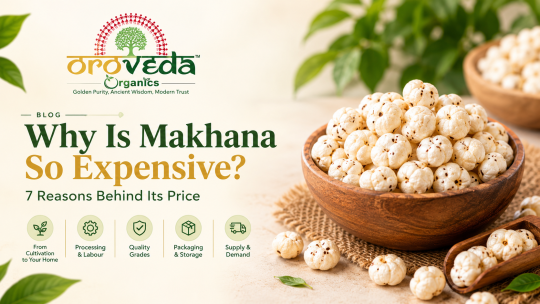
Have you ever wondered why makhana is so expensive compared with popcorn, peanuts or other everyday snacks? Makhana, also known as fox nuts or lotus seeds in common commercial usage, has become a popular choice among people looking for variety in their snacking habits. However, its price can sometimes surprise first-time buyers.
The price of makhana is influenced by several factors, including cultivation, harvesting, processing, labour, quality grading, packaging and transportation. The cost can also vary depending on the size, quality and whether you purchase raw or flavoured makhana.
In this guide, we explain why makhana is costly, what goes into bringing it from cultivation to your kitchen, and how to choose quality makhana that offers good value for money.
1. Makhana Cultivation Requires Special Growing Conditions
Unlike many common snack ingredients, makhana comes from the seeds of Euryale ferox, an aquatic plant grown in water bodies and suitable wetland environments.
Its cultivation and harvesting require appropriate growing conditions and agricultural knowledge. The availability of suitable cultivation areas, seasonal conditions, crop yields and local farming practices can all influence the amount of makhana available in the market.
When supply is limited or demand increases, prices may rise.
This is one reason the price of makhana can fluctuate between seasons, suppliers and grades.
2. Harvesting and Processing Are Labour-Intensive
One of the most important reasons behind makhana's price is the work required to turn harvested seeds into the familiar white, puffed snack.
The process involves multiple stages, which can include:
-
Harvesting and collecting the seeds.
-
Cleaning and drying the harvested material.
-
Processing and preparing the seeds for popping.
-
Heating and popping the seeds using skilled techniques.
-
Sorting and grading the finished makhana.
-
Removing unsuitable pieces and preparing the product for sale.
The exact process varies between producers and processing methods.
Unlike some snacks that can be manufactured through highly automated production lines, traditional makhana processing can involve considerable manual effort and practical skill.
Labour, processing time and the usable finished yield all contribute to the final price customers pay.
3. Not All Makhana Grades Cost the Same
Have you noticed that some makhana pieces are larger and rounder, while others are smaller or irregular in shape?
Makhana is sold in different sizes and grades. In some trade classifications, terms such as 4 sutta, 5 sutta, 6 sutta and 6+ are used to describe size categories, although grading practices can vary between suppliers.
Larger, well-popped and more uniform pieces may command higher prices when they are in demand.
The final price can depend on factors such as:
-
Size and uniformity.
-
Popping quality and shape.
-
The proportion of broken pieces.
-
Sorting and grading standards.
-
Availability of each grade.
However, bigger makhana is not automatically healthier or fresher than smaller makhana. The best choice depends on your intended use, texture preference, budget and the quality of the product.
For everyday snacking, you may not need to pay extra for the largest grade if a smaller, well-processed grade meets your needs.
4. Sorting and Quality Control Add to the Cost
After processing, makhana may need to be sorted to separate different sizes and remove broken, damaged or unsuitable pieces.
Careful sorting takes time and can reduce the quantity of product available for sale in a premium grade.
For example, a batch containing a mixture of large, uniform pieces and smaller or broken pieces may need to be separated before it can be sold in different price categories.
Good handling and quality checks also help businesses maintain consistent product appearance and reduce the chance of unsuitable material reaching customers.
These activities add costs, but they can also help buyers receive a more consistent product.
Remember that appearance alone cannot guarantee food safety. Proper hygiene, suitable storage, reliable sourcing and appropriate packaging matter too.
5. Packaging and Storage Matter
Makhana can lose its desirable crisp texture when exposed to moisture. For this reason, suitable packaging and storage practices are important.
Businesses may use sealed pouches, jars or other food-grade packaging designed to protect the product during storage and transportation.
The total packaging cost may include:
-
Food-grade pouches or jars.
-
Labels and printed packaging.
-
Sealing and packing labour.
-
Storage and inventory handling.
-
Transport and distribution.
Premium-looking jars can also cost more than basic pouches. This does not necessarily mean the makhana inside is better; it means the packaging format contributes to the final price.
When comparing products, check the net weight, packaging type, ingredients and price per 100 grams rather than judging value by the size of the container alone.
6. Why Is Flavoured Makhana Often More Expensive?
Flavoured makhana involves additional ingredients and processing compared with plain raw makhana.
Depending on the recipe, the finished product may include seasonings, spices, flavouring ingredients and oil or other coating ingredients. Preparing a consistent flavour, coating the makhana and packing it into smaller retail portions can add to the cost.
The price of flavoured varieties may reflect:
-
The cost of the base makhana.
-
Seasoning and other ingredients.
-
Roasting or flavour-coating processes.
-
Additional handling and quality checks.
-
Individual retail packaging.
-
Branding, distribution and retail expenses.
Different flavours may have different ingredient costs, so their prices do not always have to be identical.
When buying flavoured makhana, read the ingredient list and nutrition information. Compare the serving size and ingredients rather than assuming that every flavoured variety has the same nutritional profile as plain makhana.
7. Transportation, Supply and Market Demand Influence Prices
Makhana passes through several stages before reaching a consumer. Depending on the supply chain, these can include farmers, processors, traders, wholesalers, packers, distributors and retailers.
Each stage can involve costs for labour, handling, storage, transport and business operations.
Prices can also change with seasonal availability, harvest conditions, demand, fuel costs and the availability of particular grades.
This means two sellers may offer makhana at different prices even when their products appear similar. Their sourcing arrangements, purchasing volumes, packaging choices, operating costs and profit margins may differ.
A higher price does not automatically mean higher quality, just as a lower price does not necessarily mean poor quality. Comparing the actual product and its specifications is more useful than relying on price alone.
Is Expensive Makhana Worth Buying?
The answer depends on the product and your preferences.
Makhana can be a convenient snack, but the price alone does not tell you whether a particular pack offers good value.
Before buying, consider the following:
-
Quality: Look for clean, well-handled makhana with a texture appropriate to the product.
-
Size and grade: Choose a grade that suits your needs instead of automatically selecting the largest pieces.
-
Freshness: Check the packaging condition, best-before date and signs of moisture or spoilage.
-
Ingredients: For flavoured varieties, review the seasoning, oil and other ingredients.
-
Net weight: Compare the price per 100 grams across packs.
-
Storage: Choose packaging that is properly sealed and follow the manufacturer's storage instructions.
For example, smaller or mixed grades may be suitable for home recipes, while buyers who prefer a uniform appearance may choose a more consistent grade.
The best purchase is one that meets your expectations for quality, taste, quantity and budget.
Raw Makhana vs Flavoured Makhana: Which Offers Better Value?
Raw and flavoured makhana serve different purposes.
Raw makhana gives you more flexibility to roast, season or use the product in recipes at home. You can choose the ingredients and adjust the flavour to your preference.
Flavoured makhana offers convenience because the seasoning is already prepared. It may be a practical option for people who prefer ready-to-eat snacks or want to try different flavours.
To compare value fairly, consider the price per 100 grams, ingredient list, preparation requirements and your preferred taste. Flavoured makhana may cost more because of additional ingredients and processing, but the difference varies from product to product.
Frequently Asked Questions
1. Why is makhana more expensive than popcorn?
Makhana and popcorn come from different plants and involve different cultivation and processing methods. Makhana's harvesting, popping, grading and sorting requirements can contribute to its higher price. Actual prices also depend on quality, supply and market conditions.
2. Why is large-size makhana more expensive?
Larger, uniform grades may attract higher prices because of buyer demand and the availability of that grade. However, size alone does not establish nutritional quality or freshness.
3. Is raw makhana cheaper than flavoured makhana?
Raw makhana may cost less because it generally requires fewer ingredients and less flavouring work. However, the price depends on grade, sourcing, packaging, processing and the specific product being compared.
4. Does expensive makhana mean better quality?
Not necessarily. A higher price may reflect a larger grade, packaging or additional processing, but it is not proof of superior quality. Compare the product's grade, condition, ingredients, net weight and sourcing information.
5. How can I buy makhana at a reasonable price?
Compare the price per 100 grams, select a grade that meets your needs, check the ingredient list and choose a pack size you can consume while the product remains fresh. Buying a premium grade is not always necessary for everyday use.
6. Is flavoured makhana worth the extra cost?
It may be worth it if you value convenience and ready-to-eat flavours. Compare ingredients, serving size and price with plain makhana to decide what suits your budget and preferences.
7. How should makhana be stored after opening?
Keep makhana in a clean, dry, airtight container in a cool place away from moisture and direct sunlight. Reseal the original pack if it is designed for resealing, and follow the storage instructions on the label.
Final Thoughts: Understanding the Value Behind Makhana
So, why is makhana so expensive? Its price reflects more than the raw ingredient. Cultivation, harvesting, skilled processing, grading, sorting, packaging, transportation and market demand can all influence the final cost.
However, a high price does not automatically guarantee a better product. Informed buyers should look at quality, grade, ingredients, freshness and price per 100 grams before making a decision.
At Oroveda Organics, we believe customers should be able to make informed choices about the food they buy. Whether you prefer plain makhana or convenient flavoured varieties, understanding the product helps you choose what suits your taste and budget.
Explore the Oroveda Organics Flavoured Makhana Collection to discover different flavour options for your snacking preferences.
Oroveda Organics — Golden Purity, Ancient Wisdom, Modern Trust.