How to Identify Quality Makhana Before Buying | Oroveda Organics
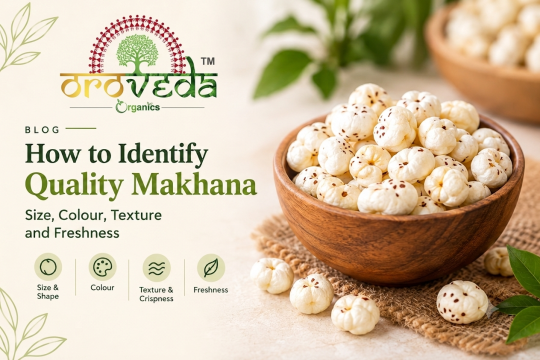
Makhana, also known as fox nuts, has become a popular snack in Indian households. It can be enjoyed roasted, seasoned with spices or incorporated into traditional Indian recipes. With increasing interest in convenient snacks, many consumers are searching for good quality makhana that suits their taste, preferences and budget.
However, not all makhana products look or perform the same. Differences in size, expansion, texture, handling and packaging can influence the overall eating experience.
If you are wondering how to identify quality makhana before buying, this guide from Oroveda Organics will help you understand the important characteristics to check when comparing different products.
1. Check the Size and Shape of Makhana
One of the first things to consider when purchasing makhana is its size and shape.
Well-expanded, relatively uniform makhana pieces are often preferred for their appearance and presentation. Smaller pieces can also be suitable for everyday cooking and snacks.
When choosing good quality makhana, look for:
-
Relatively uniform pieces if you prefer a consistent appearance.
-
Well-expanded kernels rather than a large proportion of flattened pieces.
-
Limited excessive breakage and crushed material.
-
A clearly described makhana size grade, where provided.
What Do 4 Sutta, 5 Sutta and 6 Sutta Makhana Mean?
Sutta is a traditional trade term used in the makhana industry for size grading. Sellers may use descriptions such as 4+, 5+ or 6+ to distinguish different size categories.
Grading terminology and specifications can vary between suppliers. Therefore, it is better to compare the actual product, declared grade, pack quantity and price rather than relying on the grade name alone.
Buying tip: Choose the size and grade that best suit your intended use instead of assuming that the largest pieces are always the best choice.
2. Look at the Natural Colour
The colour of makhana can provide useful information about its appearance and condition.
Popped makhana commonly has a white to creamy-white appearance. However, colour alone cannot establish the quality or safety of a product.
When inspecting makhana, look for:
-
A reasonably consistent natural appearance.
-
Excessive yellowing or browning.
-
Extensive dark patches or visibly damaged pieces.
-
Signs of contamination or poor storage.
Minor natural variations do not automatically mean a product is poor quality. Similarly, an exceptionally white appearance does not guarantee superior quality.
If you notice widespread unusual discolouration, compare the product with another pack and check its packaging and date information.
3. Check the Texture and Crispness
Texture is particularly important when choosing fresh makhana for roasting or ready-to-eat snacking.
Good eating quality generally means the product is dry and has a light, characteristic texture. Excess moisture can affect crispness and may contribute to deterioration during storage.
Here are some practical ways to assess texture:
-
Check whether the product appears dry rather than damp or sticky.
-
If buying loose makhana, inspect a sample when the seller permits it.
-
For packaged products, check the condition of the packaging.
-
Follow the manufacturer's storage instructions after opening.
A crunchy texture can be desirable for snacking, but a simple texture test cannot guarantee food safety. Always consider packaging, cleanliness and product condition as well.
4. Check the Smell and Cleanliness
Fresh, plain makhana should have a mild, characteristic aroma rather than an unpleasant or musty smell.
Before purchasing, check for:
-
Unusual musty, sour or unpleasant odours.
-
Visible insects or evidence of pest damage.
-
Foreign material or excessive dust.
-
Damaged packaging that could allow moisture or contamination.
If makhana smells unpleasant, looks contaminated or shows signs of deterioration, do not taste it to determine whether it is safe. Avoid consuming it and contact the seller.
5. Understand Whole, Broken and Irregular Makhana
A pack containing a few broken pieces is not automatically poor quality. Breakage can occur during handling, packaging and transportation.
The important consideration is whether the product matches its description and suits your intended use.
For example, larger and well-expanded pieces may be preferred for presentation and roasting, while smaller or irregular pieces can be useful in recipes where uniform appearance is less important.
Excessive crushing, powder or damaged pieces may justify closer inspection before buying.
When comparing makhana prices, consider the declared grade, net weight, packaging and overall condition together.
6. Check the Packaging and Product Label
Packaging plays an important role in protecting makhana from moisture, contamination and physical damage.
Before purchasing packaged makhana, check the following details.
Ingredients: For plain makhana, confirm that the ingredients match the product description. For flavoured makhana, read the complete ingredient list.
Net quantity: Check the declared weight in grams so you can compare products fairly.
Date information: Review the applicable manufacturing or packing date and best-before information.
Batch details: Look for batch identification and applicable food-business details.
Packaging condition: Avoid packs that are open, punctured, leaking or visibly damaged.
Storage instructions: Follow the instructions provided on the product label.
For flavoured makhana, do not assume every flavour has the same ingredients or nutritional values. Always review the information on the individual pack, especially if you need to avoid a particular ingredient.
7. How to Store Makhana and Maintain Freshness
Even good quality makhana can lose its crisp texture if it is exposed to moisture or stored improperly.
To help maintain makhana freshness after opening:
-
Keep the product in its original resealable packaging or transfer it to a clean, dry, airtight food container.
-
Store it in a cool, dry place away from direct sunlight and sources of heat.
-
Use dry hands or a clean, dry utensil when handling the product.
-
Close the container promptly after use.
-
Follow the manufacturer's storage instructions and best-before date.
Proper storage can help maintain texture and quality, but it cannot restore a product that has already deteriorated. Do not consume makhana showing signs of mould, infestation or spoilage.
8. Raw Makhana vs Flavoured Makhana: Which Should You Choose?
Both raw makhana and flavoured makhana can be suitable options depending on your preferences and how you plan to enjoy them.
Raw Makhana
Raw or plain popped makhana is a versatile option for people who prefer preparing their own snacks. It can be roasted and seasoned at home or used in a variety of recipes.
When selecting raw makhana, pay attention to its appearance, size, condition, cleanliness and intended use.
Flavoured Makhana
Flavoured makhana offers a convenient option for people who enjoy ready-seasoned snacks. Different flavours provide a choice of taste experiences, from savoury seasonings to sweeter varieties.
When choosing flavoured makhana, check the ingredient list, pack size, nutrition information and declared price.
Oroveda Organics offers a range of flavoured makhana varieties, including options such as Himalayan Rock Salt, Sweet Jaggery and Cream & Onion, subject to current availability.
Explore the collection: Oroveda Organics Flavoured Makhana
Visit the collection to explore the available flavours and select an option that suits your preferences.
9. A Quick Checklist for Buying Good Quality Makhana
Before purchasing makhana, use this simple checklist:
-
Does the product match the size or grade described by the seller?
-
Does it have a reasonably consistent, natural appearance?
-
Are there excessive broken pieces, powder or signs of damage?
-
Is the product free from unusual odours and visible contamination?
-
Is the packaging properly sealed and undamaged?
-
Are the ingredients, net quantity and date information clear?
-
Does the product suit your intended use and budget?
No single characteristic proves that makhana is the best. Considering these factors together helps you make a more informed purchasing decision.
Frequently Asked Questions About Makhana Quality
1. How can I identify good quality makhana?
Check the appearance, expansion, texture, cleanliness, smell and packaging. Compare the stated grade and product description as well. Visual inspection alone cannot establish food safety.
2. Is bigger makhana always better?
No. Larger, well-expanded pieces may be preferred for presentation or certain snacks, but smaller pieces can also be useful in everyday recipes. Quality depends on more than size alone.
3. What colour should good quality makhana be?
Popped makhana commonly has a white to creamy-white appearance. Colour should be considered alongside texture, cleanliness, odour and packaging rather than used as the only quality indicator.
4. How can I tell whether makhana has lost its freshness?
Unusual softness, dampness, a musty smell, visible deterioration or damaged packaging can be warning signs. Avoid consuming a product that appears spoiled or contaminated.
5. What does 6 Sutta makhana mean?
Sutta is a traditional trade term associated with makhana size grading. Exact specifications can vary between suppliers, so ask the seller for grading details when comparing products.
6. Is raw makhana better than flavoured makhana?
Neither is automatically better for everyone. Raw makhana gives you more control over seasoning, while flavoured makhana offers convenience. Compare ingredients, nutrition information and intended use to choose the option that suits you.
7. How should makhana be stored after opening?
Keep it in a clean, dry, airtight container in a cool, dry place. Use dry utensils and follow the storage instructions and best-before information on the pack.
8. Can broken makhana still be used?
Yes. Smaller or broken pieces can be suitable for home cooking and recipes where appearance is less important, provided the product is clean, properly stored and otherwise in good condition.
Final Thoughts
Choosing good quality makhana becomes easier when you look beyond size or price alone. Pay attention to natural appearance, texture, cleanliness, packaging and label details, and choose a grade that suits your intended use.
Whether you prefer raw makhana for home preparation or flavoured makhana for convenient snacking, understanding these basic checks can help you compare products more confidently.
At Oroveda Organics, our aim is to help customers make informed choices about the foods they bring home.
Explore our flavoured makhana collection to discover the varieties currently available.
Oroveda Organics — Golden Purity, Ancient Wisdom, Modern Trust.